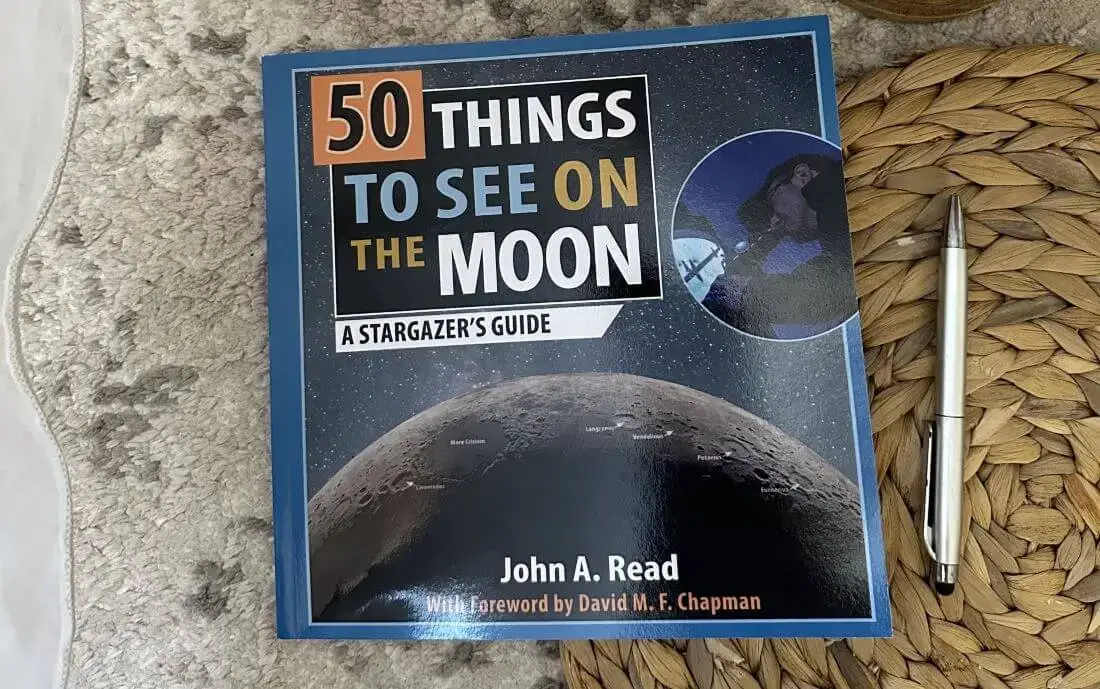
This winter has been incredibly dark and gloomy, with very few clear nights to enjoy the sky. To keep my astronomical spirits up while waiting for the weather to clear, I placed an Amazon order in January for a few books to help me study the night sky. One of the absolute standouts has been "50 Things to See on the Moon" by John A. Read.
John A. Read is an incredibly accessible author, and if you haven't checked out his YouTube channel yet, I highly recommend it—it’s a goldmine for beginners. His approach to astronomy removes the intimidation factor, and this book perfectly encapsulates that philosophy.
The Most Rewarding Target for Beginners
The Moon is undoubtedly one of the most interesting—if not the most interesting—targets in the night sky, especially for a beginner. As John A. Read himself once joked, you could look at the Moon through a cardboard toilet paper tube and it would still look fantastic.
Even with a very basic, cheap telescope, or just an ordinary pair of binoculars, the results are visually stunning. But for a long time, I faced a common beginner's problem: I would look up, see the magnificent craters and dark lunar seas, but I had no idea what exactly I was looking at. I wanted to know the geography of our closest celestial neighbor. That is exactly where this brilliant guide comes in.
Mapping the Lunar Phases
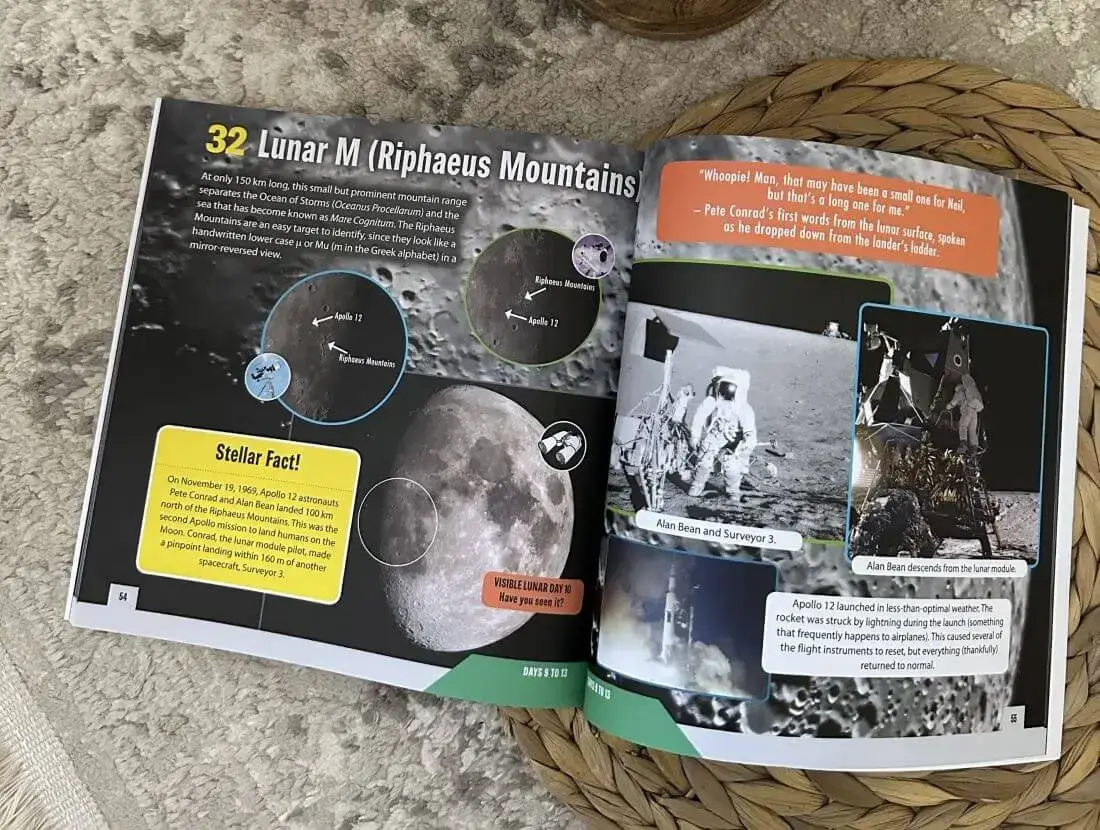
I recommend this book to absolutely everyone. It acts as a complete, easy-to-digest map of the Moon. Instead of just throwing a static map at you, the book brilliantly tracks what you can see day by day through the lunar phases. It highlights specific craters, mountain ranges, and "seas" along the terminator line (the line between the light and dark sides of the Moon, where shadows make details pop).
Alongside the clear maps, it provides a brief history and description for each of the 50 targets, giving context to the cosmic impact that formed the landscape.
My New Observing Routine
This book has completely transformed my observing sessions. My preparation now goes something like this: I set up my gear on the balcony, bring out both my telescope and my binoculars, and open the book. I check what phase the Moon is in to see what targets I should expect to find tonight. Only then do I put my eye to the eyepiece, actively hunting for those specific regions. It turns passive stargazing into an engaging scavenger hunt.
The Verdict: Minor Flaws, Major Value
The book is a quick read, coming in at around 80 pages. If I had to point out a flaw, it would be the print production. The paper quality isn't the greatest, and the print could be a bit sharper for a book that relies so heavily on visual references. There are a few other very minor nitpicks, but nothing significant enough to detract from the core experience.
Overall, my impression is overwhelmingly positive. If you are a beginner who is just starting to point your optics at the sky, this book is an absolute must-have. It will give you a profound new appreciation for the Moon.