Most people think that to be an astronomer, you need a giant tube on a heavy tripod. But as Gary Seronik points out in "Binocular Highlights," some of the sky’s most beautiful treasures are actually too big to fit in a telescope's narrow view. This book is a love letter to the simplicity of observing with two eyes and a pair of handheld glass.
Whether you are using the Bresser Hunter 7x50 or a high-end Nikon Action EX, this guide is the "treasure map" you’ve been looking for.
Organized by the Seasons
One of the things I love most about this book is its logical structure. It doesn't overwhelm you with a random list of objects. Instead, it is divided into four main chapters based on the months (e.g., December to February).
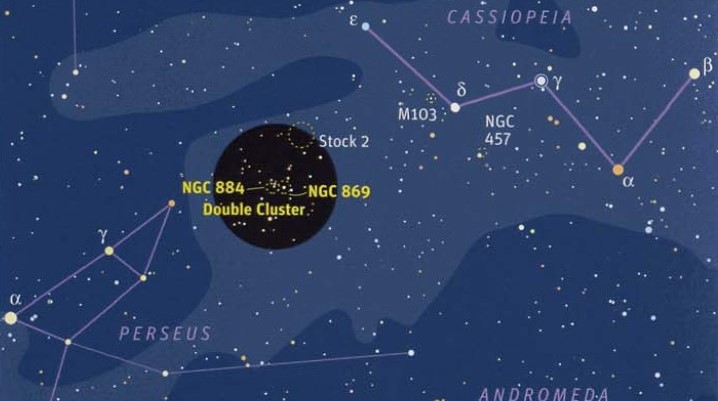
This means you always know exactly what is up in the sky right now. As I flipped through the pages, I saw everything from the famous Double Cluster in Perseus to hidden gems like Kemble’s Cascade—a stunning chain of stars that looks like a cosmic waterfall through binoculars.
Charts That Make Sense
The star charts in Binocular Highlights are specifically designed for the way binoculars see the sky. They use a darkened circular area on each map to represent the typical field of view of 10x50 binoculars.
This is a game-changer. Instead of guessing, you can look at the chart and say, "Okay, if I put this bright star at the top of my view, the cluster should be right at the bottom." It makes "star hopping" feel like second nature.
The Perfect Companion to Your Telescope
Astronomy isn't a choice between binoculars or a telescope; on the contrary, the best experience comes from using both. While a telescope allows you to dive deep into a single crater on the Moon, binoculars give you the "big picture" context. Binocular Highlights is essential because it focuses on objects that are often too large to be appreciated through a telescope's higher magnification.
One of the biggest advantages for beginners is the natural orientation. While some telescopes (like refractors with certain diagonals) can show an upright image, binoculars consistently provide a view that matches the real world. This makes the transition from looking at a constellation with your naked eye to seeing its hidden clusters through the lenses completely intuitive, without any "mental gymnastics".
Gary Seronik captures that "magic time" of twilight—the moment when the barbecue coals are cooling and the first points of light begin to shine. His writing reminds us that you don't always need to set up a heavy tripod to explore the universe; sometimes, the most inspiring discoveries happen with just a quick look through your 7x50s.
Final Verdict: A "Must-Have" for the Binocular Astronomer
This is hands down one of the best books on binocular astronomy ever written. It teaches you that you don't need to spend thousands of euros to be a "real" observer. You just need a clear sky, a steady pair of 7x50s, and this book.
If you want to move beyond just looking at the Moon and start finding real deep-sky wonders—galaxies, nebulae, and star clusters—this is your manual. It’s the perfect companion to our other favorite guides like Turn Left at Orion.