When I bought my first telescope—a modest 70mm refractor, I was full of excitement. I wasn't discouraged, but I was definitely overwhelmed. I had the gear, and I had the passion, but looking up at the vast night sky felt like trying to navigate a foreign city without a map. I spent my first few nights pointing the scope at random bright stars, enjoying the view but knowing there was so much more hidden in the dark that I just didn't know how to find.
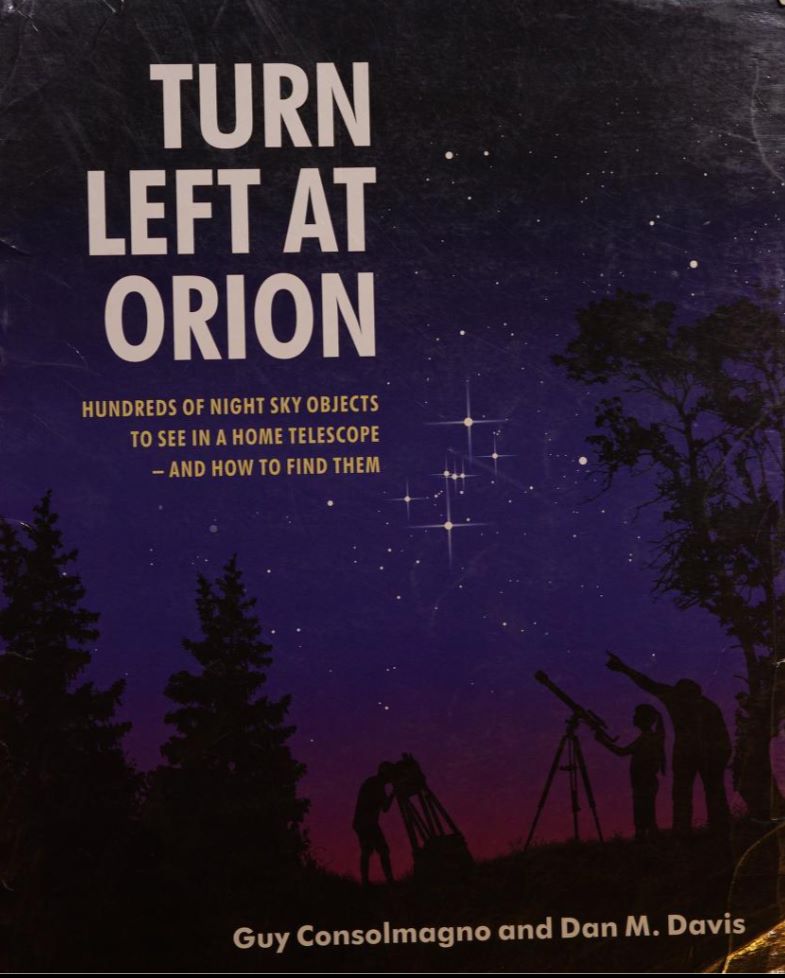
That’s when I picked up "Turn Left at Orion". It didn't just teach me how to use my telescope; it transformed the way I looked at the night sky entirely.
My "First Light" with Orion: A Winter to Remember
The real magic happened this past winter. The air was crisp and freezing—the kind of cold that gives you the clearest possible skies. I remember stepping out into the backyard, not just with my telescope, but with my Bresser Hunter 7x50 binoculars hanging around my neck.
I didn't go straight for the telescope. I started with the binoculars, scanning the three famous stars of Orion's Belt. Then, guided by the sketches in the book, my heart actually skipped a beat. I immediately swung my 70mm refractor over to that spot. When I looked through the eyepiece, the fuzzy patch exploded into the Orion Nebula.
Why Sketches Are Better Than Photos
The reason Turn Left at Orion works so well for us amateurs is that it manages your expectations perfectly. Most books show you colorful, long-exposure NASA photos. If you expect to see that through a 70mm lens, you will think your equipment is broken.
This book uses sketches. The authors drew exactly what objects look like through small telescopes. When I compared the view of the Orion Nebula in my eyepiece to the drawing in the book, they matched perfectly. It validated my cheap equipment. It taught me that the "gray smudge" I was seeing was actually a galaxy or a nebula, and that realizing what you are seeing is where the beauty lies.
Learning to "Hop" the Stars
Since my telescope isn't computerized, I have to find things manually. This book taught me the art of Star Hopping. It gives you directions like a friend guiding you down a street:
"Start at this bright star. Go two fields of view to the right. Look for a triangle of faint stars..."
It turns a freezing night into a treasure hunt. With the book flat on the table (it’s spiral-bound, thankfully) and my red flashlight in hand, I learned to navigate the sky one hop at a time. It’s incredibly satisfying to hunt down a target yourself rather than having a computer do it for you.
Final Verdict: Essential for Every Backyard Astronomer
If you are just starting out with a 70mm scope like mine, or scanning the skies with a pair of binoculars like my Bressers, this book is the best accessory you can buy.
It turned my curiosity into a lifelong obsession. It taught me patience, it taught me how to see details I would have otherwise missed, and it gave me that unforgettable moment with Orion this winter.
Don't worry about buying expensive eyepieces yet. Get this book, grab your coat, and go look up.