When you buy your first telescope, it’s natural to focus almost entirely on the optical tube. Aperture, focal length, brand — that’s where most beginners stop. What many don’t realize (and I didn’t either at the beginning) is that the eyepiece is half of your optical system. It’s the final element your eye looks through, and in beginner kits, it’s very often the weakest link.
In fact, a modest telescope with a decent eyepiece will often outperform a bigger scope paired with poor glass. This is especially true for entry-level refractors and small reflectors.
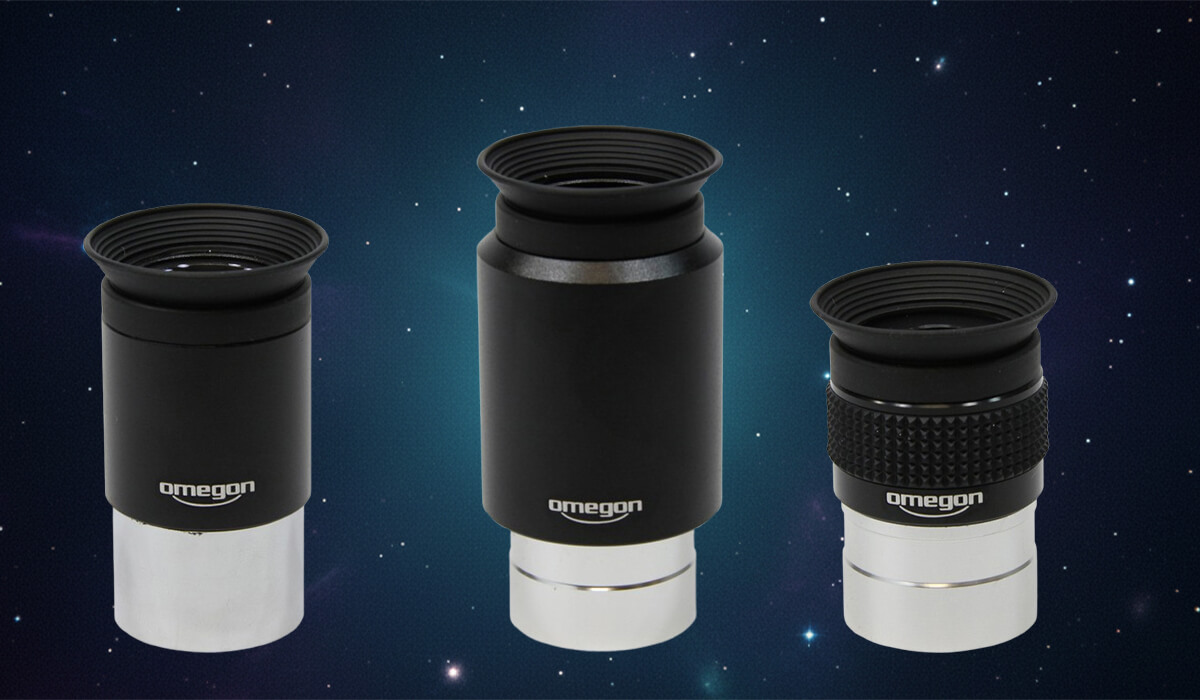
Kit Eyepieces: Why the Image Feels “Limited”
Most beginner telescopes come bundled with Huygens (H) or Kellner (K) eyepieces. On paper, they do the job — you can see the Moon, planets, and bright star clusters. In practice, they are very simple designs with just two or three glass elements.
Their main drawbacks become obvious pretty quickly:
- Narrow apparent field of view (often 30–40°)
- Noticeable chromatic aberration on bright objects
- Soft edges and loss of contrast
- The classic “looking through a straw” feeling
For a first night under the stars, this might seem normal. Many beginners assume this is simply the limitation of their telescope. In reality, it’s often the eyepiece holding everything back.
Why the Plössl Design Is Still a Classic
The Plössl eyepiece uses a four-element, two-group optical design. This may sound modest compared to modern wide-angle eyepieces, but it strikes an excellent balance between optical quality, simplicity, and price.
Compared to kit eyepieces, a good Plössl typically offers:
- A wider apparent field of view (~50°)
- Much better edge sharpness
- Higher contrast, especially on planets and the Moon
- Reduced color fringing
This improvement is immediately visible on objects like Jupiter’s cloud bands, lunar craters, or faint nebulae where contrast matters more than raw magnification.
Real-World Experience: My 70mm Refractor Upgrade
I spent a long time observing with the stock eyepieces that came with my 70mm refractor, convinced that the telescope itself was the bottleneck. The views were usable, but never inspiring.
The first night I swapped in a Plössl, the difference was obvious. Stars snapped into sharp pinpoints instead of fuzzy blobs, and the field of view suddenly felt open and relaxed. That constant urge to re-center the object was gone.
It honestly felt like upgrading the telescope — without upgrading the telescope.
Other Eyepiece Types Worth Knowing About
While Plössls are a fantastic first upgrade, they’re not the only option. As you gain experience, you’ll probably encounter:
- Wide-angle eyepieces (60–68°) – more immersive, great for deep-sky scanning
- Ultra-wide eyepieces (82°+) – stunning views, but heavier and more expensive
- Planetary eyepieces – optimized for sharpness and contrast at high magnification
For beginners, though, Plössls remain one of the safest and most cost-effective choices. They teach you how magnification, exit pupil, and field of view really work — without overwhelming you.
Recommended Plössl Upgrades (1.25")
If you’re looking for a noticeable upgrade without overspending, these Omegon Plössl eyepieces offer excellent optical performance for the price and work well with most beginner telescopes.
Omegon 32mm Plössl
The lowest-power option and the widest true field of view you can get in a 1.25" format. Ideal as a finder eyepiece and perfect for open clusters, Milky Way scanning, and large nebulae.
View on AstroshopOmegon 25mm Plössl
A true all-rounder. Slightly higher magnification than the 32mm, while still keeping images bright and sharp. Excellent for galaxies, nebulae, and general deep-sky observing.
View on AstroshopFinal Verdict: Should You Upgrade Your Eyepieces First?
If you’re disappointed with the views through your first telescope, upgrading the eyepieces should come before upgrading the telescope itself. One or two good Plössls can completely transform the observing experience.
It’s one of the rare upgrades in amateur astronomy that delivers immediate, obvious results — and often reminds you why you bought a telescope in the first place.